As part of the Monarch Humanities Internship Academy’s expansion of work-based learning opportunities, Faculty Led Internship Projects (FLIP) provide classroom-based internships that connect academic learning with applied work. For AY 2026-2027, faculty may apply for a $7500 award to update a course leveraging the principles of project-based learning to create a high-impact, class-based internship experience. Additional funding from the Monarch Humanities Internship Academy Studio (MHIA) is also available for students completing the classroom-based internship ($1000/student), so long as they meet MHIA student funding eligibility.
FLIP experiences function as focused, class-embedded internships in which students complete work-based learning projects, collaborate with professional partners when possible, and receive structured feedback and guided reflection. Project-based learning activities, with a focus on real-world, employer-identified problems, help build students’ skills and career readiness to enter the workforce (Kumar & Revathy, 2023). These experiences mirror key elements of traditional internships while remaining integrated within a course, allowing students to develop and articulate professional skills through this embedded work-based learning opportunity.
Faculty Support and Funding
To support implementation, MHIA offers FLIP Course Development Awards of $7,500 for faculty developing and facilitating a Faculty Led Internship Project experience during the 2026–2027 academic year. Faculty selected for FLIP funding will have course design and WBL pedagogical support from the MHIA Faculty Development team to assist with project scoping, partner alignment, assignment structure, and integration of reflection and assessment.
Funding supports course-based internships that provide structured, embedded work-based learning opportunities for students within Humanities courses.
Examples include, but are not limited to:
-
Partner-based applied projects embedded within an existing course
-
Course-based consulting or research projects for community organizations
-
Creative or communication deliverables developed for external audiences
-
Discipline-specific applied projects aligned with program learning goals
Student Experience
Students enrolled in FLIP courses participate in a structured, applied learning experience that mirrors key expectations of an internship while remaining embedded within the classroom. Through these experiences, students:
-
Work on applied work-based learning projects, when possible with external partners or audiences
-
Receive guidance from faculty and, when appropriate, industry or community collaborators
-
Engage in structured feedback throughout the project timeline
-
Produce a tangible professional deliverable
-
Develop and demonstrate career-ready skills through applied work
-
Complete guided reflection to support skill articulation and professional development
Eligible students participating in approved FLIP courses will:
-
Receive $1,000 in MHIA student support funding
-
Earn Work-Based Learning (WBL) credit toward the university experiential learning requirement
-
Gain short-term internship experience within a structured course environment
-
Build portfolio-ready professional deliverables
-
Practice articulating transferable skills and professional growth towards future internships or professional endeavors
FLIP Requirements Alignment to University Work-Based Learning Criteria
To be considered an eligible work-based learning experience, FLIP class-based include:
-
Clearly defined goals aligned with academic program requirements and career aspirations
-
Professional guidance provided by industry professionals and/or faculty
-
Application of classroom knowledge in workplace settings, bridging theory and practice
-
Networking opportunities to connect with practicing professionals and gain insight into the labor market
-
Certifications (when applicable) that enhance professional qualifications
-
At least 40 hours of applied work completed throughout the project
These criteria ensure FLIP experiences maintain the rigor and professional relevance of traditional internships while remaining accessible within a classroom-based format.
FLIP Structure
FLIP experiences are designed to:
-
Engage students in applied work connected to real organizations, communities, or audiences
-
Provide mentorship from faculty and, when appropriate, external partners
-
Include structured feedback throughout the project timeline
-
Require a tangible professional deliverable
-
Incorporate guided reflection to support skill articulation and transfer
-
Occur within a defined project scope aligned to course learning goals
Spring 2026
Faculty participating in Faculty Led Internship Projects (FLIP) are designing and delivering courses that function as classroom-based internships, connecting academic learning with applied, professional work. With support from MHIA funding and course design guidance, faculty are embedding feedback, reflection, and career-ready skill development into their courses while aligning with university work-based learning criteria.
The highlights below showcase how these approaches translate into practical, scalable models for work-based learning across the Humanities.
Tracy Barnett
HIST 396 Today's Public History


Tracy shares the following reflection on this experience.
Delenda Est Norfolk: The Tidewater Revolts
“This course, HIST 396: Topics in Today’s Public History, invited students to engage with major debates and current issues in the field of public history. As the United States approaches the 250th anniversary of the Declaration of Independence, cultural institutions across the country are preparing to mark this milestone. I wanted students to participate in this national conversation and consider how such commemorations shape public understanding of the past.
This project gave ODU students the unique opportunity to do the work of public historians: collaborate with one another, develop exhibit themes, design promotional materials, propose and pitch ideas, conduct historical research, select material objects, craft object labels, and write exhibit panels. Students thought about how to present a nuanced and complicated history to a general audience.
Public history, as a discipline, values hands-on learning and professional experience. For students interested in this field, it is essential not only to understand best practices and current debates in the field, but also to apply those ideas in real-world contexts. Through this collaborative project, students translated classroom learning into meaningful public engagement.”

Exhibit created by students in HIST 396: Topics in Today's Public History, Spring 2026
Kiera Dillman, Alise Dunham, Kristen Gary, Olivia M. Harris,
Nelliel A. Herrera, Logan Holzgrefe, R.J. Lynch, Adam M. Manis, David Morgan, Luke Pickard, Shayla M. Shaw, Landon Swain,
Kenny Wilcox, and Bailey M. Wimberly

"No Kings" to "No ICE" by Kiera Dillman & Bailey M. Wimberly
Nicole Willock
PHIL 353 Asian Religions
Norfolk Zoo: Asian Trail Project
As part of a Faculty-Led Internship Project (FLIP), students in PHIL 353 partner with the Norfolk Zoo to serve as cultural interpreters for the Asian Trail. In this course-embedded, work-based learning experience, students researched, analyzed, and developed public-facing interpretive signage that contextualized cultural and religious elements represented throughout the exhibit. Demonstrating their critical process, one student shared, "since signage is tied to place, I need to understand how visitors experience the structure as they approach it and pass through it."
Working with assigned locations across the trail, students investigated the historical, religious, and cultural significance of features such as Tibetan chorten-inspired architecture, Chinese-style pagodas, Balinese masks (including Barong and Rangda), Tibetan prayer flags, and other Southeast and East Asian symbolic elements. Another student shared that after observing the spaces, "there wasn’t any clear signage explaining what the prayer flags represent or why they are important… the station felt a little disconnected". This helped them find inspiration to translate this research into accessible, audience-aware materials designed for a general public audience. A student also commented, "I am deeply excited to follow through on these ideas and am greatly enjoying this project and its opportunities thus far".
Students left the course with portfolio-ready deliverables and a clearly defined project experience that demonstrated their ability to apply Humanities knowledge in professional and public-facing contexts. Dr. Willock’s FLIP model succeeds by positioning students as active contributors to a community facing project. Through applied, site-specific work, students develop audience awareness, identified and solved communication gaps, and translate complex cultural knowledge into accessible public-facing content. The project structure fosters both critical thinking and professional skill development, while the connection to a community partner increases student investment and sense of ownership. Thank you again to the Norfolk Zoo for their guidance and participation in this project!


Carolina Conte
COMM/THEA 495 Storytelling & Film

About Storytelling & Film
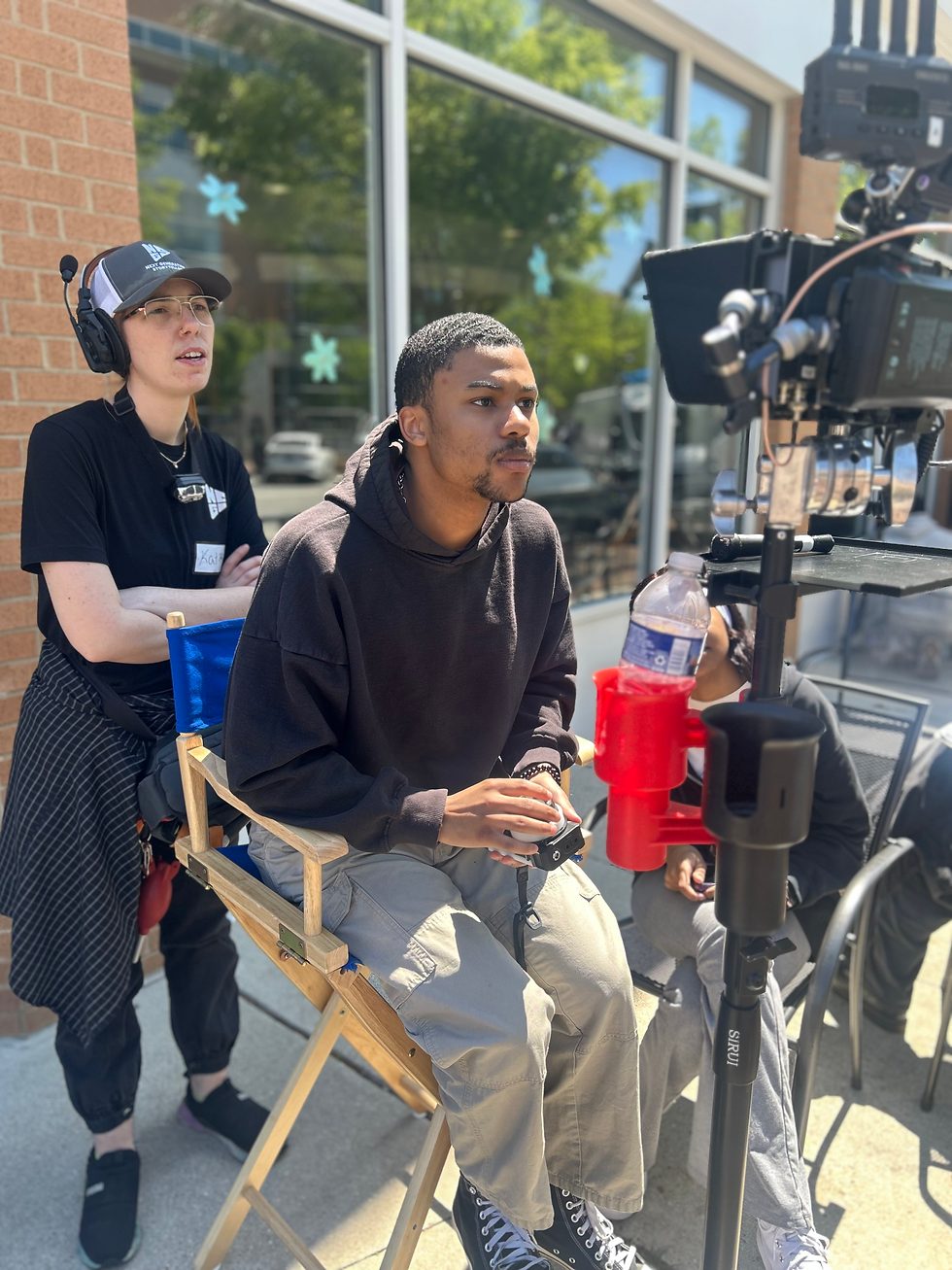
Students collaborated with industry partners from Next Generation Storytellers to produce a professional short film, working in structured crew roles that mirror real-world production environments. The course centers on three integrated components: a full-scale film project, a behind-the-scenes “Making Of” mini documentary, and a communal ePortfolio. Across these, students build and demonstrate competencies in teamwork, leadership, communication, and digital production while navigating deadlines, solving complex creative challenges, and engaging in iterative feedback.
Reflection and skill articulation remain central. Through on-camera interviews and curated portfolios, students assess their contributions, document growth, and translate their work into clear, career-ready narratives. The communal ePortfolio further reinforces collaboration and elevates diverse perspectives across the cohort.
Together, these elements establish the course as a signature work-based learning experience in Communication & Theatre Arts, blending creative practice with professional preparation and leaving students with both a completed film credit and a portfolio of applied skills.
Prof. Conte goes on to share, "What makes this experience impactful is that our students are leading the work, not simulating it. They’re collaborating with industry partners, navigating real constraints, and reflecting on those choices as they go. That combination of practice and reflection is what makes the work-based learning relevant to any major."